En un mundo donde las personas están más conectadas que nunca, el inbound marketing se convierte en la estrategia clave para atraer clientes de manera orgánica. Se trata de ofrecerles lo que buscan de una forma valiosa y relevante. Este enfoque se basa en crear una relación de confianza, educando al cliente mientras lo atraes hacia tu marca, en lugar de perseguirlo con tácticas tradicionales.
Metodología
A diferencia de las estrategias de marketing tradicionales, el inbound marketing no solo busca atraer, sino mantener a los clientes a lo largo del tiempo. Al centrarte en la creación de contenido que aporte valor, como blogs, videos y recursos educativos, te posicionas como una fuente confiable que responde a las necesidades reales de tu audiencia. Esto genera una fidelización a largo plazo que va más allá de una simple transacción.
La clave es sencilla
“El buen contenido no solo informa, conecta y cautiva.”
“Un contenido de valor no solo atrae visitas, sino que construye relaciones.”
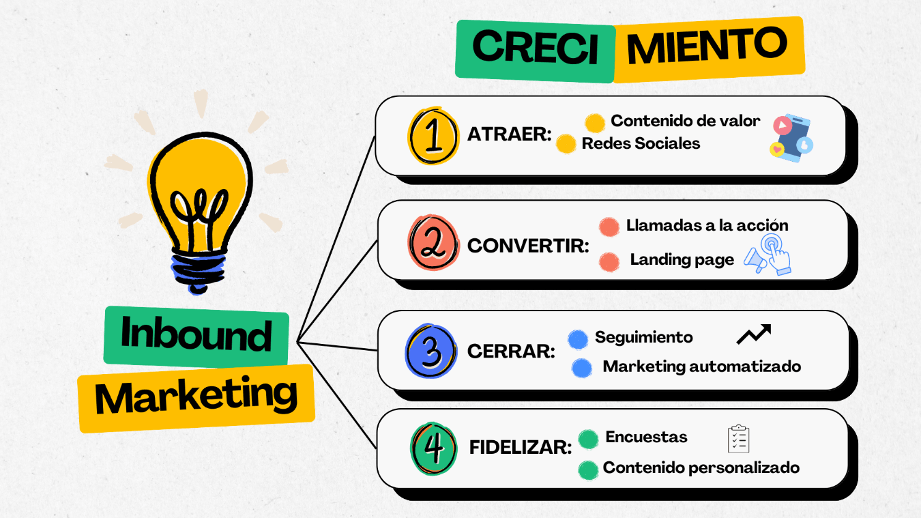
Los cuatro pilares del inbound marketing:
- Atraer: Generar tráfico hacia tu sitio con contenido relevante.
- Convertir: Transformar a los visitantes en leads (contactos) mediante formularios y llamadas a la acción.
- Cerrar: Convertir esos leads en clientes mediante estrategias de ventas efectivas.
- Fidelizar: Asegurar la satisfacción de los clientes, fomentar su lealtad y convertirlos en promotores de la marca.
El inbound marketing es importante porque:
- Atrae a una audiencia más calificada que está genuinamente interesada en lo que ofreces.
- Construye confianza y relaciones duraderas con los clientes.
- Es más rentable en comparación con el marketing tradicional.
- Nutre a los leads hasta la conversión y fideliza a los clientes a largo plazo.
- Ofrece métricas claras y medibles, lo que facilita la toma de decisiones informadas.
- Aumenta la visibilidad de la marca de forma orgánica.
- Fomenta el boca a boca y la recomendación, generando más clientes potenciales.
El inbound marketing no solo se trata de atraer más tráfico, sino de atraer el tráfico correcto, construir relaciones de valor y, en última instancia, generar una base de clientes leales y promotores de tu marca.
¡Es una estrategia fundamental en el marketing digital actual!
Estrategias de Inbound Marketing
Las estrategias de Inbound Marketing son el arte de atraer clientes sin interrumpir, sino aportando valor. Desde contenido relevante hasta la automatización de procesos, cada táctica guía al consumidor de forma natural hacia la conversión. ¿Listo para descubrir cómo cautivar y fidelizar a tu audiencia?
1. Estrategias para Atraer
Estas estrategias buscan atraer visitantes al sitio web mediante contenido relevante y optimizado para el descubrimiento.
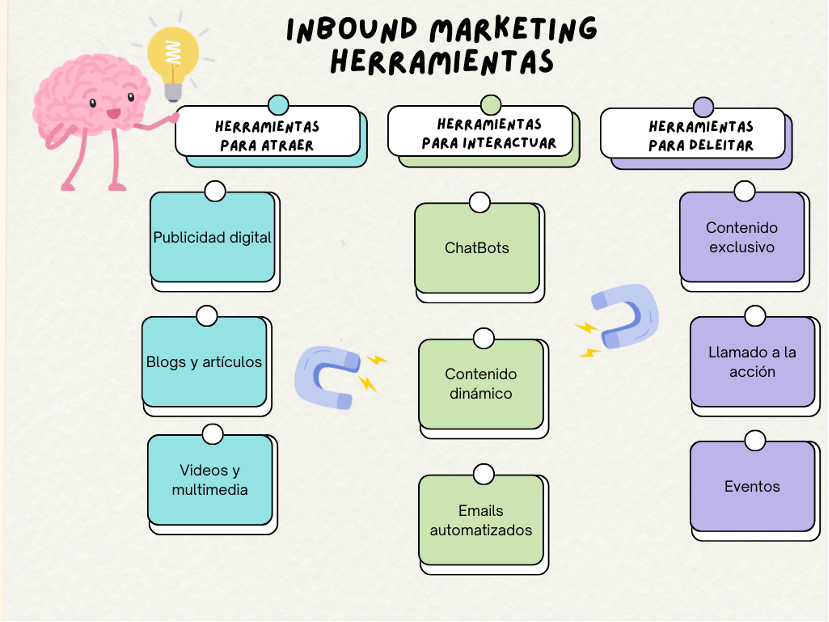
- SEO y palabras clave: Optimización del contenido para motores de búsqueda mediante el uso de palabras clave estratégicas y técnicas de SEO on-page y off-page.
- Marketing de contenidos: Creación de blogs, videos, infografías y ebooks que respondan a las necesidades e intereses de los buyer personas.
- Redes sociales: Difusión del contenido en plataformas sociales para ampliar el alcance y generar engagement.
- Publicidad digital: Uso de campañas pagadas en redes sociales para atraer tráfico segmentado.
2. Estrategias para Convertir
Estas tácticas están orientadas a convertir a los visitantes en leads mediante la captura de información de contacto.
- Landing pages: Diseño de páginas de destino con formularios y llamados a la acción claros y persuasivos.
- Ofertas de valor: Creación de contenido exclusivo como whitepapers, webinars y guías descargables para incentivar el registro.
- Automatización del marketing: Implementación de herramientas para gestionar flujos de trabajo (workflows) y envíos de correos electrónicos personalizados.
3. Estrategias para Cerrar
El objetivo en esta etapa es cerrar oportunidades y convertir leads en clientes.
- Lead nurturing: Nutrición de leads a través de correos electrónicos automatizados y contenido específico que los prepare para la compra.
- Segmentación: Uso de bases de datos segmentadas para enviar mensajes personalizados y relevantes según el perfil del lead.
- Análisis y optimización de embudos: Monitoreo de cada etapa de los visitantes en tu sitio web para identificar puntos de mejora y ajustar las estrategias.
4. Estrategias para Deleitar y Fidelizar
Una vez lograda la conversión, estas estrategias buscan fidelizar al cliente y convertirlo en promotor de la marca.
- Contenido post-venta: Ofrecimiento de contenido educativo, tutoriales y recursos para maximizar la experiencia del cliente.
- Programas de fidelización: Incentivos y programas para retener a los clientes a largo plazo.
- Atención al cliente proactiva: Uso de chatbots y encuestas de satisfacción para asegurar una experiencia óptima.
Implementa el Inbound Marketing
El Inbound Marketing es una estrategia efectiva que ayuda a las empresas a atraer, convertir y fidelizar a sus clientes de manera natural. En lugar de interrumpir a las personas con anuncios invasivos, el Inbound Marketing se enfoca en ofrecer contenido útil que responde a las preguntas y necesidades de los usuarios en cada etapa de su recorrido. Esto se logra a través de blogs, redes sociales, SEO, y la creación de material valioso como guías o videos. Además, las herramientas de automatización, como los correos electrónicos personalizados y los bots, permiten mantener el contacto de manera efectiva con los leads, ayudándolos a avanzar hacia la compra.
Lo más importante del Inbound Marketing es que ayuda a construir relaciones a largo plazo con los clientes. A medida que las empresas proporcionan contenido valioso y resuelven problemas, logran ganarse la confianza de los usuarios, lo que aumenta las posibilidades de que se conviertan en clientes leales. Este proceso no termina después de la compra; al seguir interactuando con los clientes a través de correos electrónicos y atención al cliente, las empresas pueden asegurarse de que estos clientes continúen regresando. Además, al medir constantemente los resultados y hacer ajustes, el Inbound Marketing se adapta y mejora con el tiempo, lo que lleva a un crecimiento sostenido.
Excelente información, no tenia ni idea que era el inbound marketing
Invitados a comentar por este medio.. Un saludo cordial